The Books You Never Finished Are Living in Your Head Rent-Free — And That's Not an Accident
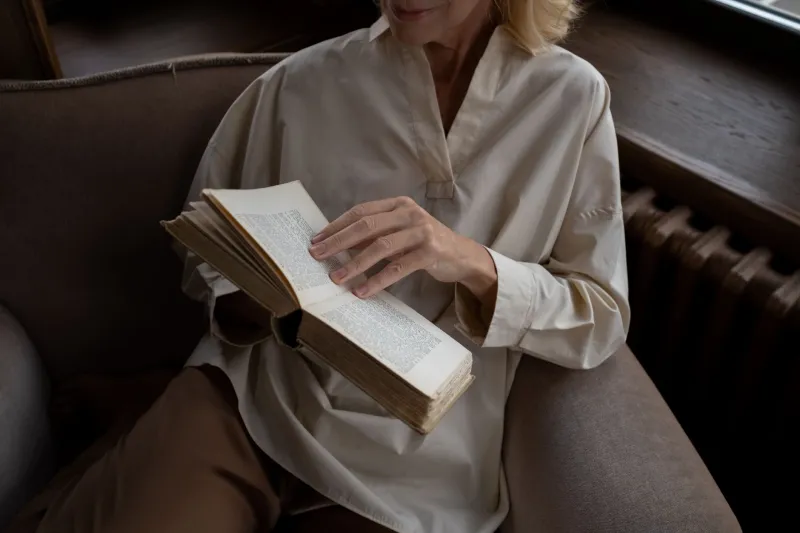
Somewhere on your nightstand — or buried in a tote bag, or quietly haunting your Kindle app — there's a book you never finished. Maybe you got 80 pages in and life happened. Maybe the plot stalled around chapter six and you just... drifted. You told yourself you'd come back to it. You haven't.
And yet, that book? You think about it constantly.
Not the one you finished last March. Not the thriller you blew through in a weekend. The abandoned one. The half-read one. The one with a bookmark frozen in place like a little paper monument to your distraction.
Here's the thing: that's not a personal failure. That's your brain doing something genuinely strange — and kind of brilliant.
Your Brain Hates an Open Loop
Back in the 1920s, a Soviet psychologist named Bluma Zeigarnik noticed something odd while watching waiters at a café. The servers could recall every detail of unpaid orders with almost perfect accuracy. The moment a tab was settled? Gone. The memory evaporated almost immediately.
What she eventually documented — now called the Zeigarnik Effect — is the brain's tendency to fixate on incomplete tasks. Finished things get filed away. Unfinished things stay active, like a browser tab your mind refuses to close.
Apply that to books, and suddenly your reading history makes a lot more sense. The novel you completed gets shelved — mentally and physically. The one you abandoned becomes a low-grade obsession. Your brain keeps it warm, keeps returning to it, keeps wondering.
And here's the twist: that wondering? It might actually be doing more for you than the finished book ever did.
The Story Your Imagination Writes Is Better Than the One on the Page
When you stop reading mid-narrative, something interesting kicks in. Your brain doesn't just pause the story — it continues it. Quietly, involuntarily, often without you realizing it, your imagination starts filling in the gaps. You construct possible endings. You revisit scenes and reinterpret them. You wonder about characters the way you wonder about real people.
This is something novelists actually understand intuitively. Skilled writers don't resolve everything. They leave threads dangling, questions unanswered, tension unresolved — because they know that a reader's imagination, when properly activated, will do more heavy lifting than any prose can. The best cliffhangers aren't lazy writing. They're a deliberate handoff.
When you abandon a book mid-story, you accidentally become a co-author. The narrative lives in two places simultaneously: on the page you left, and inside your own head, evolving in ways the actual author never intended.
That's a strange kind of intimacy. And it tends to stick.
Why Completed Stories Fade Faster
There's a reason you can barely remember the plot of a book you finished two years ago, but you can describe the exact scene where you stopped reading a book you never completed. Closure, it turns out, is kind of a memory killer.
Once your brain registers that something is done, it starts the process of compression. Details blur. Emotional peaks flatten. The story gets reduced to a general impression — "I liked it" or "it was fine" — and the specifics dissolve. This isn't a flaw. It's efficient. Your brain has limited storage and a long reading list to get through.
But the unfinished book never gets that treatment. It stays uncompressed. Every scene you read remains accessible because your brain is still treating it as active information — something it might need later, when you finally pick it back up.
The irony is brutal: the books you completed are the ones slowly fading. The ones you abandoned are the ones staying vivid.
What This Means for Your Reading List
If you've been treating your stack of half-read books as evidence of some personal character flaw — a monument to your inability to commit — maybe reframe that.
Some of those books are living fuller lives in your imagination than they ever would have if you'd pushed through to the last page. Your brain is actively engaged with them. You're thinking about the characters, speculating about the plot, returning to specific passages. That's not abandonment. That's a different kind of reading.
Now, this doesn't mean you should deliberately quit every book at the midpoint like some kind of psychological hack. Plenty of stories genuinely need their endings. Resolution matters. Payoff is real. There's a reason we binge TV shows at 1 a.m. — the pull toward completion is powerful and legitimate.
But it does mean you can let go of the guilt spiral around unfinished books. The reading list graveyard you've been quietly ashamed of? It might be one of the most active libraries you own.
The Summary Paradox
Here's where it gets interesting for anyone who's ever reached for a summary instead of finishing a book (no judgment — that's kind of our whole thing here at House of Summary).
A summary gives you the ending. It resolves the loop. And in doing so, it might actually reduce how much you think about a book — not increase it. You get the information, the brain files it away, and the story loses its haunting quality.
Sometimes that's exactly what you need. You wanted the ideas, not the obsession. Totally valid. But if part of what you loved about a book was the way it lingered — the way certain characters or questions kept surfacing in your mind — a clean summary might accidentally strip that out.
The incomplete version of something can be more alive than the complete version. That's not a comfortable idea for a platform built on condensed content, but it's an honest one.
So What Do You Actually Do With This?
A few honest suggestions:
Stop treating your abandoned books as failures. Some of them are doing real cognitive work for you. Let them.
Notice which unfinished books you keep thinking about. Those are the ones worth returning to — not out of obligation, but because your brain is clearly not done with them.
Be selective about summaries. If a book is already living rent-free in your head, maybe let it stay unresolved a little longer. The uncertainty might be the point.
And if you're going to quit a book, quit it at an interesting moment. Mid-chapter. Mid-scene. Mid-sentence, if you're feeling dramatic. Give your brain something worth chewing on.
The books you never finished aren't the ones that got away. They're the ones that stayed.