You Have Access to Every Song Ever Made and You're Listening to the Same 12
Somewhere around 2015, the music industry handed us a miracle and we used it to replay the same playlist we made in college.
Spotify alone hosts over 100 million tracks. Apple Music is right there with it. Amazon Music, Tidal, YouTube Music — the combined libraries of every streaming platform represent something genuinely unprecedented in human history: basically every song ever commercially recorded, available instantly, for the price of a couple of lattes a month. It's an absurd amount of music. More than any human could listen to in thousands of lifetimes.
And yet. Check your Spotify Wrapped. Count the artists. Be honest with yourself.
Most of us are cycling through a rotation so small it would've fit on a single CD-R in 2003.
The Paradox Nobody Warned Us About
Here's the thing about unlimited access: it doesn't make you more adventurous. It makes you more anxious. Psychologist Barry Schwartz called this the Paradox of Choice back in 2004, and streaming culture has turned his academic observation into a daily lived experience for hundreds of millions of people.
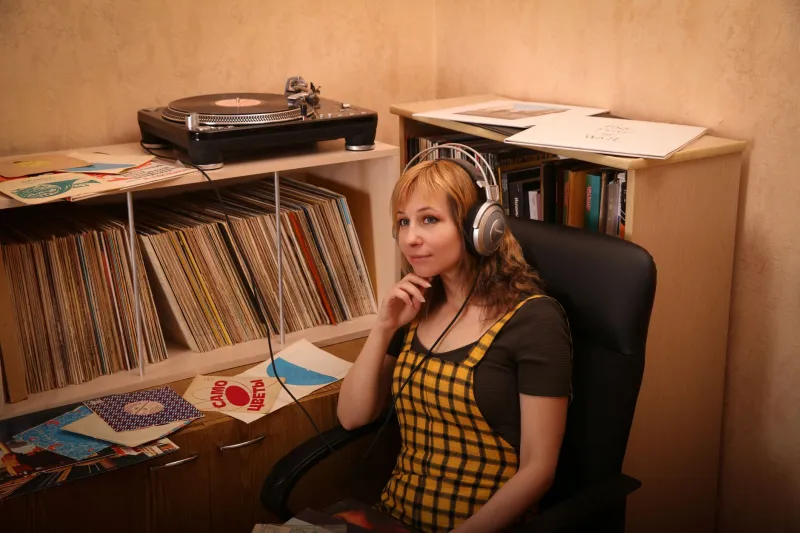
When you walked into a record store with twenty bucks, you made a decision. You browsed, you took a risk, you bought something. Maybe it was great. Maybe it was a disaster. Either way, you listened to it, because you'd spent actual money and you were going to get something out of it.
Now there's no friction. No stakes. And paradoxically, that's the problem.
When everything is available and nothing costs extra, the psychological calculus flips. Instead of the question being what should I try? it becomes what if I pick wrong? There's no recovery cost for a bad choice, sure — but there's also no commitment forcing you to sit with anything long enough to actually appreciate it. So instead of exploring, most of us retreat. We hit shuffle on Liked Songs. We go back to the album that got us through a breakup in 2018. We play it safe in a space specifically designed to make safe unnecessary.
The Algorithm Isn't Your Friend. It's Your Mirror.
Streaming platforms will tell you their recommendation engines exist to help you discover new music. That's technically true and functionally misleading.
The algorithm's actual job is to keep you on the platform. Discovery is a means to that end, not the goal itself. And what keeps people on platforms isn't novelty — it's comfort. So what you actually get from Spotify's Discover Weekly or Apple Music's For You section isn't a genuine adventure into unfamiliar territory. It's a carefully engineered hall of mirrors reflecting your existing tastes back at you with just enough variation to feel like exploration.
You like indie folk? Here are seventeen more indie folk artists who sound almost exactly like the ones you already love. You're into 90s hip-hop? Here's a playlist of songs that sit right next to the ones you've already heard a hundred times. The algorithm is optimizing for the sweet spot between familiar and slightly new — close enough to keep you comfortable, different enough to feel like it's doing something.
Actual discovery — the kind where you stumble onto something genuinely weird and foreign and maybe initially off-putting before it becomes your favorite thing — that's not what the algorithm is designed to deliver. That kind of discovery requires friction. Requires discomfort. And discomfort makes people close the app.
What We Lost When the Record Store Closed
There's a version of music consumption that most people under 30 have never really experienced, and it's worth mourning a little.
The record store clerk who would look at what you were buying and say if you like that, you need to hear this and hand you something completely unexpected. The friend who made you a mix CD with songs you'd never have found on your own. The college radio station playing at 2am that had no algorithm, no engagement metrics, just a DJ with weird taste and an hour to fill.
All of that was inefficient. All of it was occasionally annoying. And all of it regularly resulted in genuine discovery — the kind that changed people's relationship with music permanently.
Streaming replaced the inefficiency with optimization and called it an upgrade. In pure convenience terms, it was. In terms of the actual experience of being a music listener, something got quietly lost in the transaction.
The Summary Problem, Applied to Sound
At House of Summary, we think a lot about what happens when you compress and optimize the experience of consuming content. Sometimes condensing information is exactly right — you get the core ideas, you save time, you move on better informed. But there's a version of compression that removes the very things that made the original worth experiencing.
Streaming did something similar to music discovery. It compressed the process of finding new music into an algorithmic shortcut that's fast, frictionless, and deeply conservative. You get music faster. You get more of it. But you get less of what actually mattered about the experience of finding something new.
The summary isn't always the story. Sometimes the journey to the thing is the thing.
How to Actually Listen to Something New
If you want to break out of your twelve-song loop, the algorithm isn't going to save you. You have to actively work against it.
A few things that actually work:
Follow a human, not a playlist. Find music writers, bloggers, or even just people on social media whose taste you respect and let them do the curation. Human recommendations come with context, enthusiasm, and actual opinions — things an algorithm doesn't have.
Use genre rabbit holes intentionally. Pick a genre you know nothing about and go deep for a month. Not the algorithm's version of it — the actual thing. Brazilian tropicália. Ethiopian jazz from the 70s. Early Detroit techno. Go weird.
Bring back the commitment mechanic. Give an album three full listens before you decide how you feel about it. The first listen is almost always about whether it sounds familiar. The second is where you start actually hearing it. The third is where you find out if it has something real to offer.
Turn off autoplay. Seriously. When a playlist ends, let it end. The silence will make you make a choice instead of drifting wherever the algorithm wants to take you next.
The Music Is Out There. The Problem Is You.
This isn't really about streaming platforms, even though they make an easy villain. The algorithm is just giving us what we've demonstrated we want, and what we've demonstrated we want is comfort dressed up as variety.
The 100 million songs are still there. The genuinely strange, challenging, life-changing music is still there. It's not hiding. It's not hard to find.
We just have to want it more than we want the familiar. And in a world optimized to keep us comfortable, that turns out to be surprisingly hard.
Your next favorite song already exists. It's probably nothing like what you're listening to right now.
That's kind of the whole point.