The Machine That Decides What Stories You Deserve

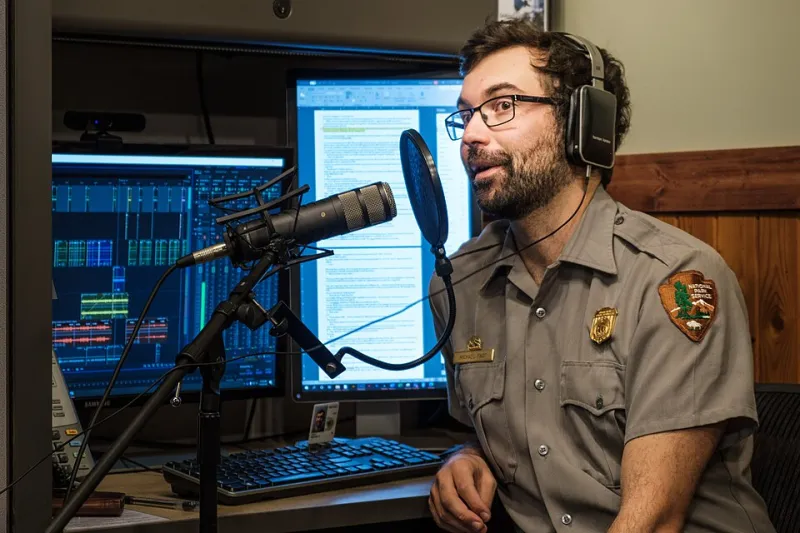
Photo: USFWS Mountain-Prairie, Public domain, via Wikimedia Commons
Somewhere in Los Gatos, California, a server is reading right now. It's reading your pause points — the exact timestamp where you stopped a documentary and switched to something else. It's reading the difference between the shows you finish and the ones you abandon at episode three. It's reading your Tuesday night habits versus your Sunday afternoon ones, and it's building a model of your taste that is, in many measurable ways, more accurate than your own self-assessment.
This is not science fiction. This is Netflix's content strategy meeting.
The question worth asking — the one the platform would rather you not sit with too long — is whether an algorithm that reads you this well is actually serving your interests, or just its own.
From Recommendation Engine to Story Engine
Most people understand that streaming platforms use algorithms to recommend content. What fewer people realize is how far upstream that influence now travels.
Netflix doesn't just use data to suggest what you watch. It uses data to decide what gets made. When the company greenlit Squid Game's international distribution push, when it doubled down on true crime, when it decided that limited series outperform multi-season commitments with certain demographics — those weren't gut calls from a visionary executive. They were outputs of a system that had already processed billions of viewing decisions.
The algorithm, in other words, isn't just curating stories. It's commissioning them.
Ted Sarandos, Netflix's co-CEO, has been relatively candid about this. The company's famous "taste clusters" — groupings of users with statistically similar viewing patterns — directly inform what kinds of content get funded. If a cluster of 40 million users reliably watches a certain type of thriller to completion, that's not a niche. That's a business case.
The Summarization Problem Nobody's Talking About
Here's where it gets philosophically interesting, and a little uncomfortable.
These systems don't just track what you watch — they categorize and effectively summarize content to match it against your profile. Every piece of media on a major streaming platform is tagged with hundreds of metadata attributes: tone, pacing, narrative structure, emotional arc, subject matter, even the racial and gender composition of lead characters. Netflix reportedly uses a team of human taggers alongside machine learning models to build these content fingerprints.
The algorithm then pattern-matches those fingerprints against your behavioral history. It's doing, at industrial scale, exactly what a great editor or a knowledgeable friend does when they recommend a book — except it's doing it without taste, without values, and without any particular investment in whether the story is good. It only cares whether you'll watch it.
The result is a kind of cultural compression. Stories get made that fit cleanly into existing taste clusters. Ambiguous, difficult, formally experimental work — the kind that doesn't resolve neatly into a metadata tag — becomes a harder sell. Not impossible. But harder.
Did Algorithms Kill the Mid-Budget Drama?
There's a conversation happening in Hollywood right now that sounds like nostalgia but is actually a data problem.
The mid-budget adult drama — the kind of film that used to fill October release slots before awards season — has largely migrated to streaming or disappeared entirely. Movies like Moneyball, The Descendants, Crazy, Stupid, Love — films with real budgets, real stars, and genuine ambiguity about whether they'd find an audience — are increasingly rare in theatrical release.
Streaming was supposed to save those stories. And in some ways it has. Netflix funds more films per year than most major studios. But the algorithm has a preference for certainty, and mid-budget dramas are inherently uncertain. They don't have the built-in audience of a franchise. They don't fit cleanly into a genre cluster. They require a viewer to take a small risk.
Algorithms don't love risk. They love predictability dressed up as discovery.
The irony is that the platforms most responsible for this narrowing also produce some of the most genuinely adventurous content on television. The Bear, Severance, Beef, Ripley — streaming has delivered real artistic ambition. But those shows exist in tension with the system, not because of it. They succeed partly by being too specific and distinctive for the algorithm to have predicted their appeal. They sneak through.
The Democratization Argument (And Its Limits)
There's a genuine counterargument here, and it deserves honest treatment.
Before algorithms, Hollywood gatekeepers were a small, demographically homogeneous group of mostly white, mostly male executives making instinct-based calls about what Middle America wanted to see. The results were predictable in their own way — and often far less representative of actual American diversity than the data-driven system that replaced them.
Algorithmic curation has, in measurable ways, expanded what gets made and who gets to make it. International content — Korean dramas, Spanish thrillers, Nigerian films — found global audiences through Netflix's recommendation engine in ways that would have been impossible through traditional distribution. Squid Game didn't need a US studio executive to believe in it. It needed enough data points to suggest that its taste cluster was large enough to justify the bet.
That's not nothing. That's actually significant.
But democratization and narrowing can happen simultaneously. A system can open doors for Korean directors while quietly closing them for American stories that don't fit existing behavioral patterns. The algorithm doesn't discriminate by nationality. It discriminates by predictability.
What Gets Lost in Translation
The deepest issue might be this: algorithms are extraordinarily good at identifying what audiences have liked, and genuinely bad at anticipating what they could like if given the chance.
Every cultural breakthrough — every Sopranos, every Atlanta, every Twin Peaks — succeeded by creating a taste that didn't previously exist in measurable form. You can't train a model on viewer behavior that hasn't happened yet. You can't A/B test an audience into wanting something genuinely new.
The best human editors, curators, and programmers have always operated on a mix of data and conviction — knowing when the numbers were wrong, knowing when a story mattered even if the metrics didn't support it. That judgment isn't gone from the industry. But it's increasingly outvoted.
At House of Summary, we spend a lot of time thinking about the difference between efficient access to content and genuine engagement with it. Algorithms are extraordinarily good at the first thing. They're structurally indifferent to the second.
The machine reads faster than any of us. The question is whether it understands anything it's reading — and whether, left unchecked, it'll eventually convince us that understanding was never the point.