You've Read Every Productivity Book and Accomplished Absolutely Nothing

Photo: Albrecht Dürer, CC0, via Wikimedia Commons
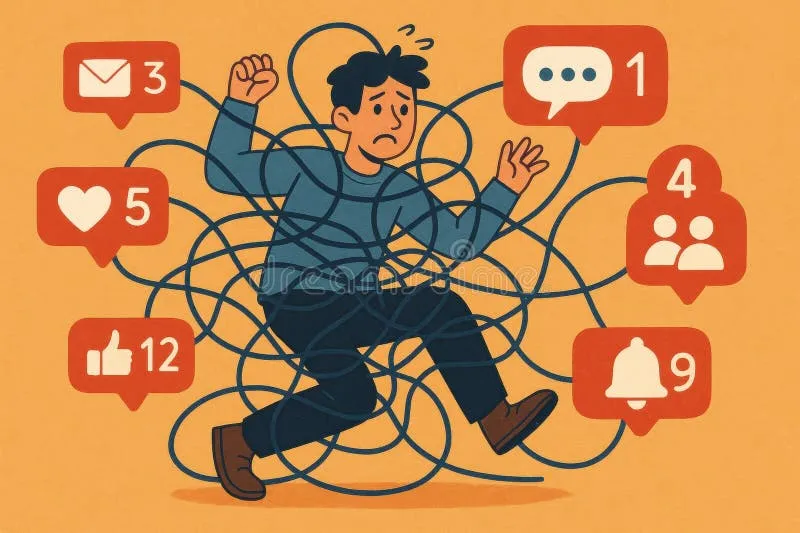
Somewhere between your dog-eared copy of Getting Things Done and the Atomic Habits summary you saved to Pocket six months ago, something went sideways. You know the two-minute rule. You know the Pomodoro Technique. You've highlighted more sentences about deep work than Cal Newport has probably written in his actual deep work sessions. And yet — your inbox is still a disaster, your side project is still a Notion page with three bullet points, and you just added another title to your reading list.
Welcome to the productivity paradox. The more you consume content about doing, the less you actually do.
The Shelf That Built a Billion-Dollar Industry
The US self-help market is worth somewhere north of $13 billion annually, and productivity books are its reliable workhorse. These aren't impulse buys. People purchase them with genuine intention. There's a real moment of motivation — usually a Sunday evening, usually after a particularly chaotic week — where cracking open a new framework feels like turning over a new leaf.
The problem is that feeling is the product.
Researchers call it "self-licensing" — the psychological phenomenon where the intention to do something gives you the same emotional reward as actually doing it. Buying a gym membership makes you feel fitter. Downloading a budgeting app makes you feel more financially responsible. And buying The 4-Hour Workweek makes you feel like you're already on your way to a laptop lifestyle in Lisbon. The purchase is the performance. The reading is the encore.
And the industry has figured this out completely.
Productivity Porn: A Clinical Definition
The term "productivity porn" has been floating around corners of the internet for years, but it deserves a sharper definition. It's not just content about productivity. It's content that delivers the sensation of productivity without requiring any of the friction that actual productivity demands.
Friction is the key word here. Real systems are annoying to build. Real habit change involves failure, adjustment, and a fair amount of boredom. A book that promises a morning routine that will "transform your output" skips all of that. It gives you the highlight reel of someone else's discipline and lets you borrow their identity for the length of a chapter.
That's a genuinely good feeling. It's also completely useless.
The YouTube algorithm has turbocharged this. Search "productivity system" on any given Tuesday and you'll find hours of content — aesthetic desk setups, color-coded calendars, elaborate second-brain architectures — designed not to help you work better but to keep you watching. The engagement metrics on "my entire productivity system explained" videos are through the roof. The metrics on "I actually implemented this for 90 days" videos are considerably less impressive, mostly because those videos are a lot more uncomfortable to watch.
The Authors Aren't Always Running the Systems They're Selling
Here's where it gets genuinely interesting — and a little awkward.
Several of the most prominent voices in the productivity space have, at various points, publicly acknowledged that their own lives don't match the frameworks in their books. Tim Ferriss has been candid about struggling with depression and periods of paralysis that don't exactly scream "four-hour workweek." David Allen, the Getting Things Done architect, has spoken about the gap between articulating a system and living it consistently. Even James Clear, whose Atomic Habits became a cultural phenomenon, has noted that writing a book about habits doesn't make you immune to breaking them.
None of this is a gotcha. These are honest people talking about a genuinely hard problem. But it does reveal something important: the people closest to this material — the ones who've thought about it longer and more deeply than anyone — still struggle with implementation. If the map were actually the territory, that wouldn't be the case.
Why Summaries Can Be Part of the Problem (And Part of the Solution)
We should be honest here, because this is literally our thing. Summaries — including the ones we publish — can feed the same loop. Consuming a condensed version of a productivity framework scratches the same itch as reading the whole book. You get the dopamine hit of knowing the thing without ever doing the thing.
But here's the distinction that actually matters: a summary used as a filter is a tool. A summary used as a destination is just faster procrastination.
If you read a condensed take on Deep Work and decide the full book isn't for you, great — you saved six hours. If you read a condensed take and decide the core ideas are worth building into your actual routine, also great — you have a head start. What doesn't work is treating the summary as a credential. "I know what deep work is" and "I practice deep work" are not the same sentence, no matter how many bullet points you've internalized.
The One Question Worth Asking
There's a simple diagnostic that cuts through most of this noise. Before you buy the next productivity book, before you queue up the next framework explainer, ask yourself: What happened with the last system I learned?
Not whether you remember it. Whether you tried it. Whether you adjusted it when it didn't fit. Whether you gave it enough time to feel uncomfortable before abandoning it.
If the honest answer is "I read it and moved on," then adding more input isn't your problem. You don't have a knowledge gap. You have an implementation gap. And no book — summary or otherwise — closes an implementation gap. Only doing that.
The Uncomfortable Summary
Productivity content is genuinely useful, right up until it becomes a hobby. The line between "learning how to work better" and "consuming content about working better instead of working" is thinner than any of us want to admit, and it moves depending on the week.
The productivity industry isn't evil. It's just optimized for consumption, not transformation. Those are different goals with different business models. One of them is your problem to solve.
So close the tab. Close this one too, eventually. Pick one thing from the last framework you actually remember, and try it tomorrow — badly, imperfectly, without a color-coded Notion template. That's the whole system. Everything else is just a very expensive way to feel busy.